
The antidote to voluntourism
Your students don't need
to save Africa
We run year-round programs feeding schools and building water access for women across Kenya. Your students don't parachute in for two weeks — they join work that's already changing communities.
Most school trips call it "service learning"
But the service is designed for the student, not the community.
Projects get built for visitors. When the bus leaves, the project stops. Money flows to international operators, not local families. Students observe poverty but never learn why it exists. Parents can't explain what the trip actually accomplished.
And the community? They host group after group, year after year, performing gratitude for an audience that will never return.
Sound familiar? There's a better way.
Two models. One actually works.
Here's what happens on a typical "service learning" trip — and what happens when you partner with Kapes instead.
Voluntourism is a $173 billion industry built on good intentions. We decided to build something built on good outcomes instead.
See Our Year-Round ModelThe impact doesn't start when
your students arrive
And it doesn't stop when they leave. Our programs run 365 days a year with Kenyan-led teams. School trips plug into existing work — not the other way around.
Programs run year-round
Seeds2Education gardens, water cooperatives, and school feeding programs operate 365 days a year with Kenyan-led teams. This is not a project built for visitors.
Your students join the work
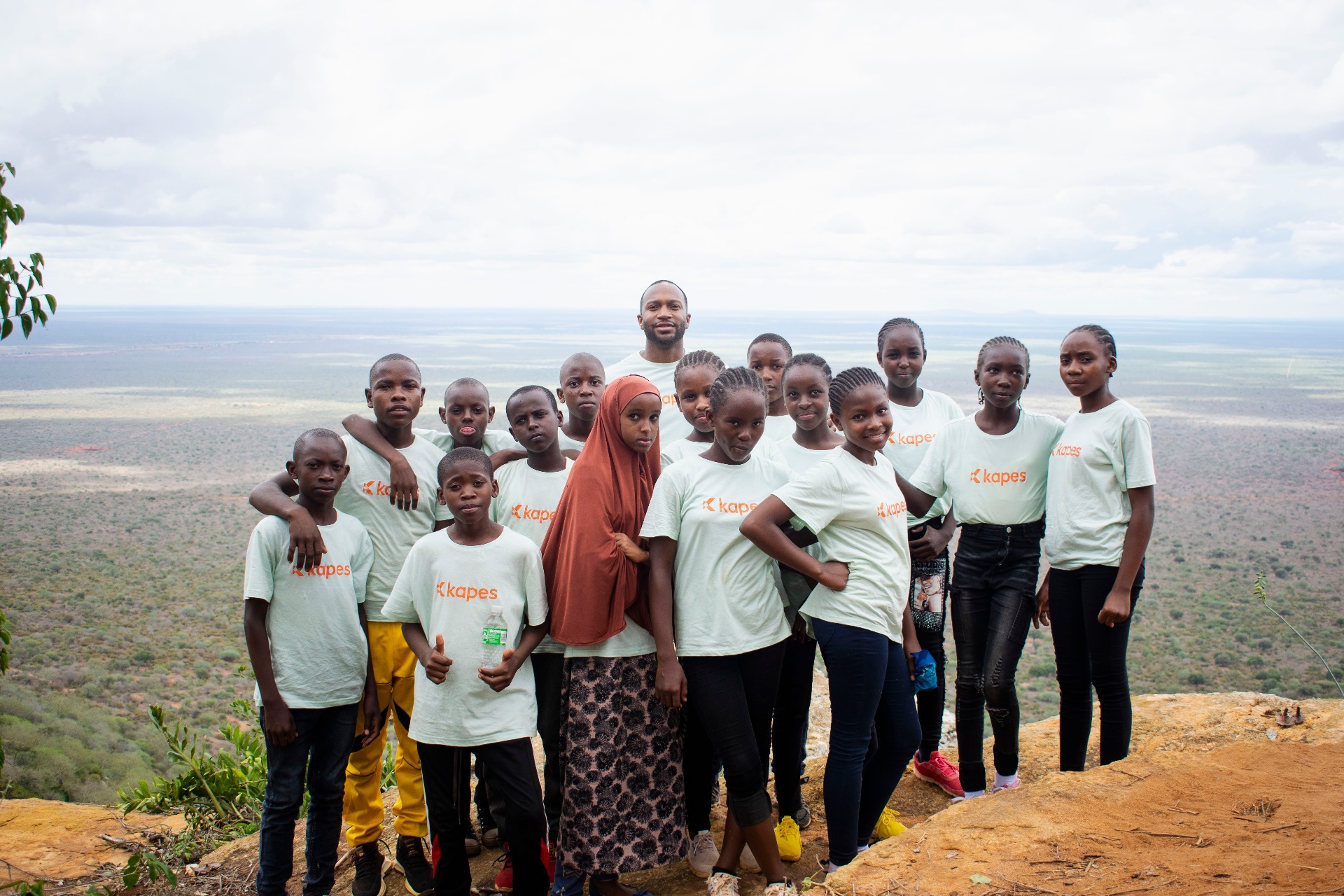
Small groups of 10-30 students arrive as learners. They work alongside local rangers and community members on programs already making a difference.
Impact continues after they leave
The gardens keep feeding children. The water infrastructure keeps serving women. Your students go home with understanding — not hero stories.
This is the difference between voluntourism and partnership. We don't build projects for your students. We build programs for communities — and your students are welcome to join.
Two programs. Real outcomes.
Your students don't arrive to build something that will crumble. They join programs that are already feeding children and empowering women every single day.


Don't take our word for it
"Experiential learning helps bring to life the things we can only do in theory. Seeing these enterprises firsthand, understanding how they contribute to a better world — the children can only do that firsthand, and it will change them as much as it's changed me."
From uniforms to year-round programs
In 2020, Matthew Benjamin founded Kapes Uniforms to transform the uniform industry and break down barriers to education.
A year later, he stood in Kenya's Kasigau Corridor — home to the world's first carbon neutral factory — and saw environmental conservation and community development working hand in hand. Not as theory. As daily reality.
By 2022, Kapes Adventures was born. Not as a trip company that bolted on a service component. As a community development organisation that invites schools to join the work.
That distinction matters. It's the difference between voluntourism and partnership.
Is Kapes right for your school?
We're not for everyone. And that's by design. If you're uncomfortable with the voluntourism model, you're in the right place.
You're a great fit if:
- You want your students to learn alongside communities, not "help" them
- You're tired of trips that look like voluntourism — even if they're marketed differently
- You need curriculum-aligned trips with pre-trip and post-trip learning
- You want to explain to parents exactly where their money goes
- You care about what happens in the community after your students leave
- You're looking for a long-term partner, not a one-off trip vendor
We're probably not the right fit if:
- You want a safari with a service day bolted on
- You need 100+ student group sizes
- You want students to lead projects they're not qualified to run
- You're looking for the cheapest option regardless of community impact
- You want a trip that looks good on Instagram more than one that does good on the ground
- You're not willing to invest in pre-trip curriculum
Are your school trips making
a real difference?
Most school trips create photos and memories. But do they create lasting change for communities? Or do they just create lasting memories for students? Our free 5-minute assessment scores your programme across 5 dimensions and shows you where the gaps are.
20 questions. 5 minutes. Honest results. No sugar-coating.
Take the Impact ScorecardFree. No credit card. Results delivered instantly.
Questions schools ask us
Especially schools that have been burned by voluntourism before.
Voluntourism builds projects for visiting students. We build programs for communities and invite students to participate. Your students arrive as learners, not helpers. Kenyan teams lead every project. The community sets the agenda — not us, and not your school. Most importantly: our programs run 365 days a year. They existed before your students arrived and they'll continue long after.
The same thing that was happening before they arrived. Our programs run year-round with Kenyan-led teams. Seeds2Education gardens feed children every day. Water cooperatives serve women every week. Your students join ongoing work — they don't create it or end it.
The opposite. Students who understand the context of their work find it far more meaningful than painting a wall that didn't need painting. They leave with real understanding of systemic issues, genuine relationships with community members, and the humility that comes from learning alongside people rather than "serving" them.
By design. Kenyan teams lead every program. Students are positioned as learners from day one. Pre-trip curriculum covers colonial history, systemic inequality, and the ethics of international travel. We don't let students lead projects they're not qualified to run. And we never, ever use photos of your students "helping" local children in our marketing.
We can show you exactly where every dollar goes. Revenue stays in communities — not with international operators. We're building toward full pricing transparency because parents deserve to know. Ask us for a breakdown during your consultation.
We work with groups of 10-30 students, typically ages 14-18. Each group gets 2 dedicated Kapes leaders plus trained local rangers. Small groups mean real relationships — not a tourist bus experience.
Yes. Every trip includes pre-trip learning modules covering the history, economics, and ethics of what they'll experience. On-ground sessions are led by Kenyan experts. Post-trip reflection frameworks help students process and apply what they learned. We align with SDGs and IB CAS hours.
We share our full risk management plans, health protocols, and emergency procedures with parents before the trip. 24/7 local staff. Transparent from day one. No surprises.
Stop sending students
to save. Start sending them to learn.
Our programs run year-round. Your students join when the time is right — and the community benefits long after they leave. Talk to our Kenya team about which program fits your school's goals.
No commitment. No sales pitch. Just a conversation about what's possible.